

In the time we’ve spent working with electric cooperatives, one thing has become very clear: the cooperative’s mission is too important for software to get in the way.
Co-ops operate in one of the most complex information environments of any industry. GIS, OMS, CIS, SCADA, work management, vegetation management, staking, asset management, finance, engineering, drone imagery, satellite data. All of these systems need to interact. The complexity of that environment calls for the best tool for each job, and the cooperatives that thrive are the ones whose systems work together.
At Bloom Spatial, we believe the future of utility software is interoperability.
Data should move freely and securely between systems. Vendors should cooperate. Co-ops should own their data and have full access to it.
Most importantly, the cooperative should be at the center of the technology stack.
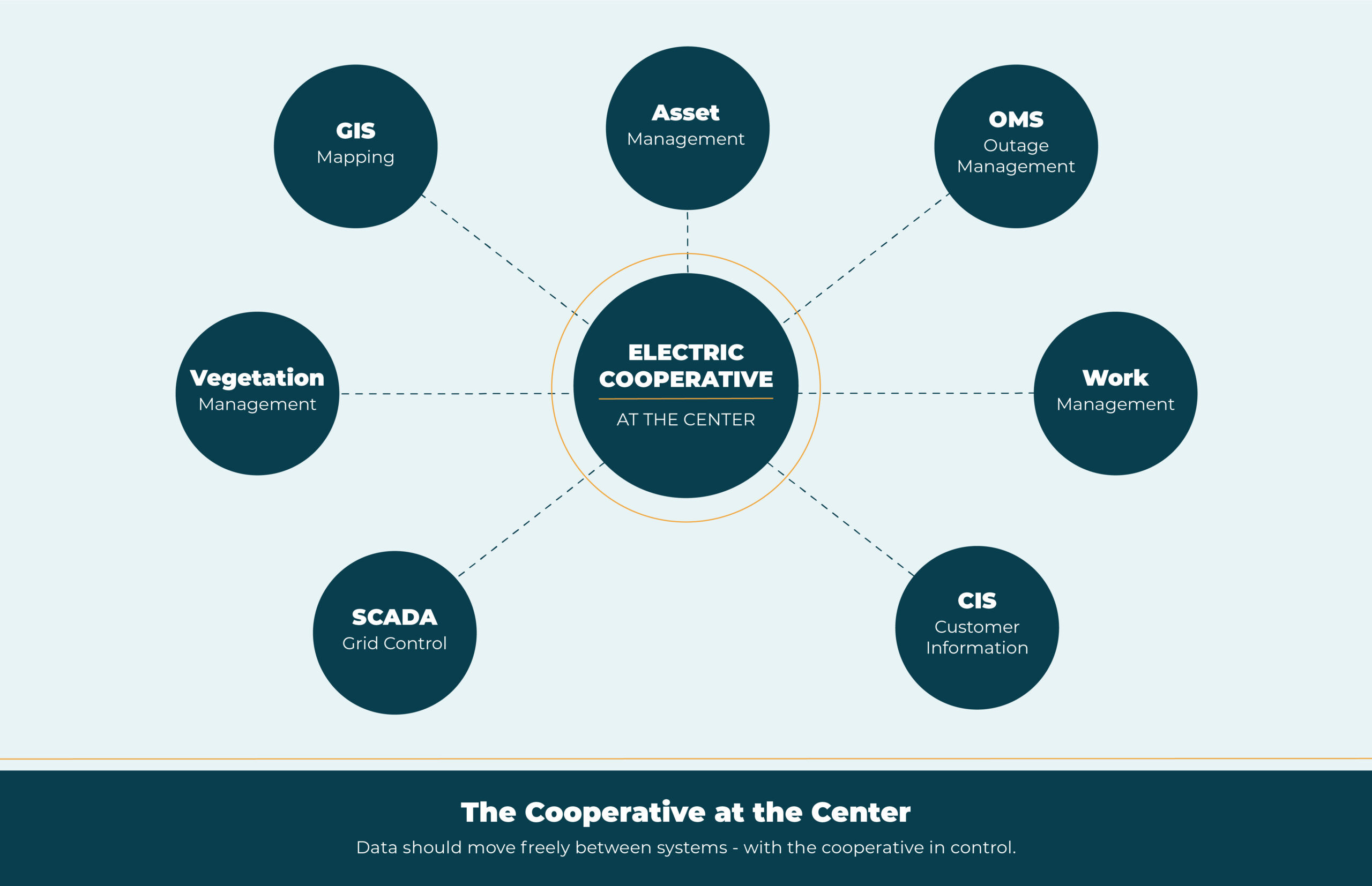
When systems can share data cleanly, everyone wins. Vegetation managers get better visibility. Engineers get better context. Operations gets better decisions. Members get better reliability.
And the cooperative keeps the flexibility to choose the best tool for each job.
This philosophy shapes how we build software at Bloom Spatial.
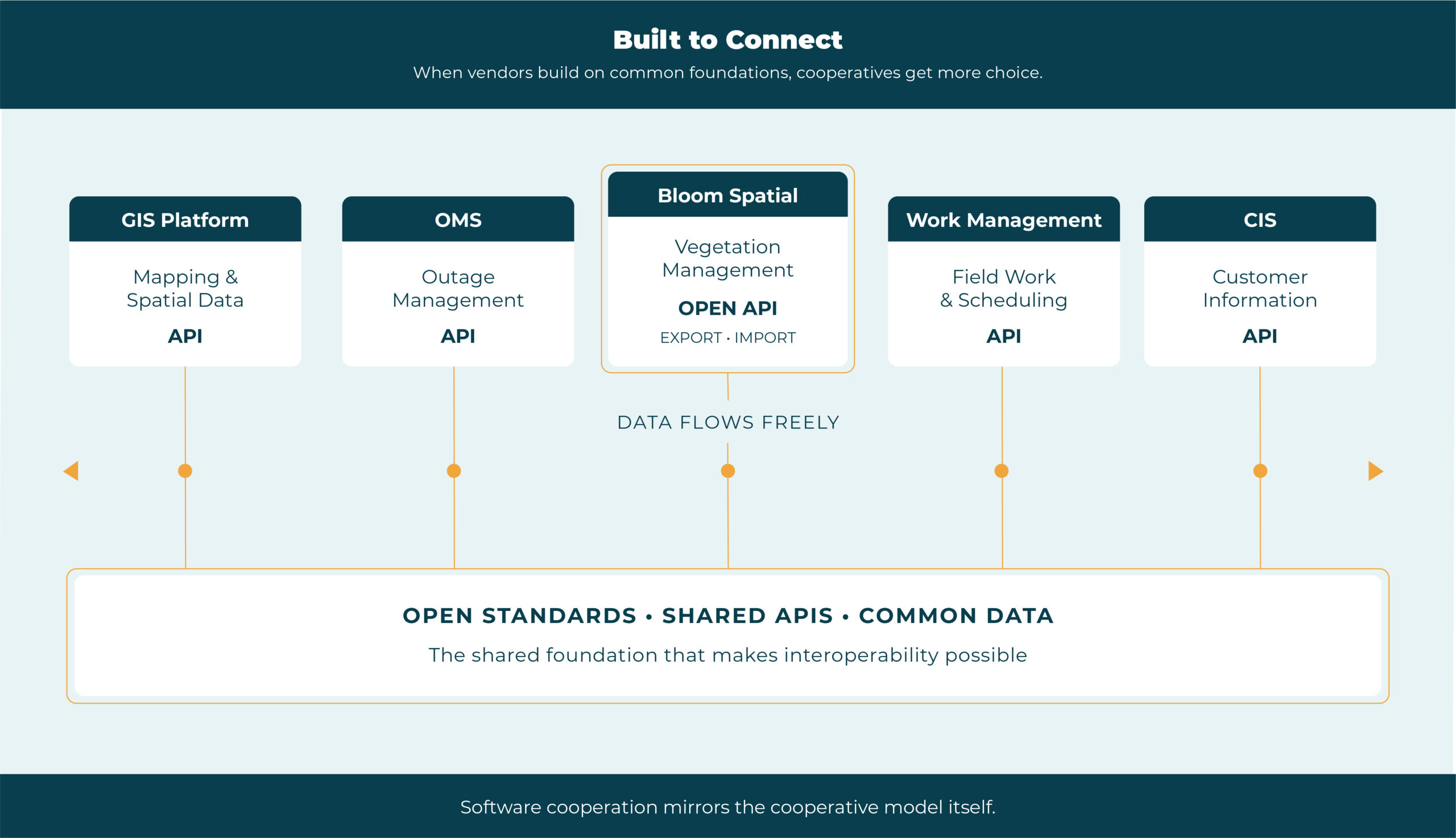
We design our platform to integrate with existing GIS, OMS, and work management systems instead of replacing them. We publish APIs. We support exports and imports. We work with other vendors when it benefits the cooperative, even when that means we are not the only system in the workflow. That is not a compromise. That is the point.
Because the mission belongs to the cooperative. We are just here to support it.
The electric cooperative world has always been built on cooperation. Co-ops share crews after storms. They share best practices. They share generation resources. They help each other because the mission is bigger than any one organization.
Software should work the same way.
That’s why we also believe strongly in the role of open standards, open interfaces, and where it makes sense, open source components. Not because it is fashionable, but because shared foundations make the entire ecosystem stronger. When vendors build on common building blocks, cooperatives get more choice, more stability, and more innovation.
At Bloom Spatial, we are committed to building tools that cooperate, integrate, and play well with others. Because that’s how electric cooperatives work, and that’s how their software should work too.


Leave a Reply